Danny & Caleb Goldberg (Father/Son)
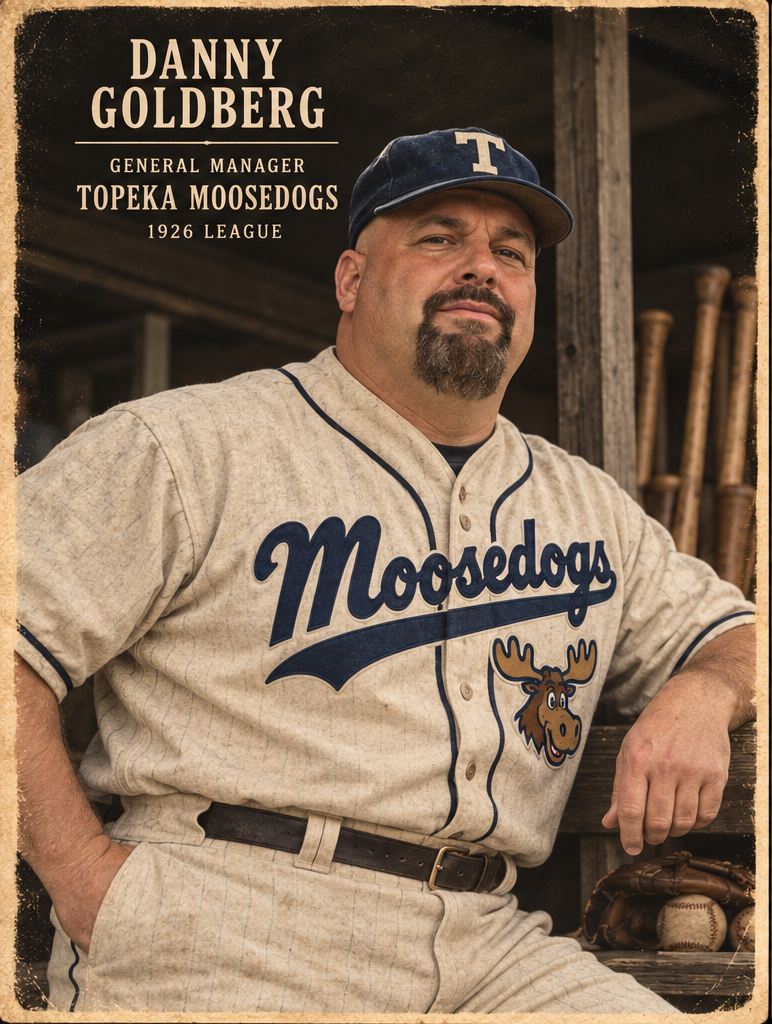
Danny Goldberg ♢ Topeka Moosedogs
Danny M Goldberg brings an entrepreneur’s mentality to the front office: identify undervalued assets, think several moves ahead, and never be afraid to take a calculated risk. A longtime baseball and simulation-game enthusiast, Danny approaches the 1926 league as much like a general manager as a fantasy owner.
His roster-building philosophy combines winning now with long-term value. Rather than simply chasing the biggest 1926 statistics, Danny looks several seasons ahead, searching for players whose best years are still coming. His early roster construction reflects that approach, building around players such as Mickey Cochrane, Tony Lazzeri, Dazzy Vance, Freddy Lindstrom and George Burns while continually evaluating how each player projects through the late 1920s and early 1930s.
Away from Diamond Mind, Danny is a serial entrepreneur, professional trainer and author. That business background carries directly into his baseball strategy: value matters, opportunity cost matters, and every roster spot is an investment.
There is also one opponent Danny particularly enjoys competing against—his son, Caleb. The two may share a family name and a love of baseball, but once the draft starts, information becomes considerably harder to come by.
Front Office Philosophy: Build for today. Draft for tomorrow. And never let Caleb know who you really want.
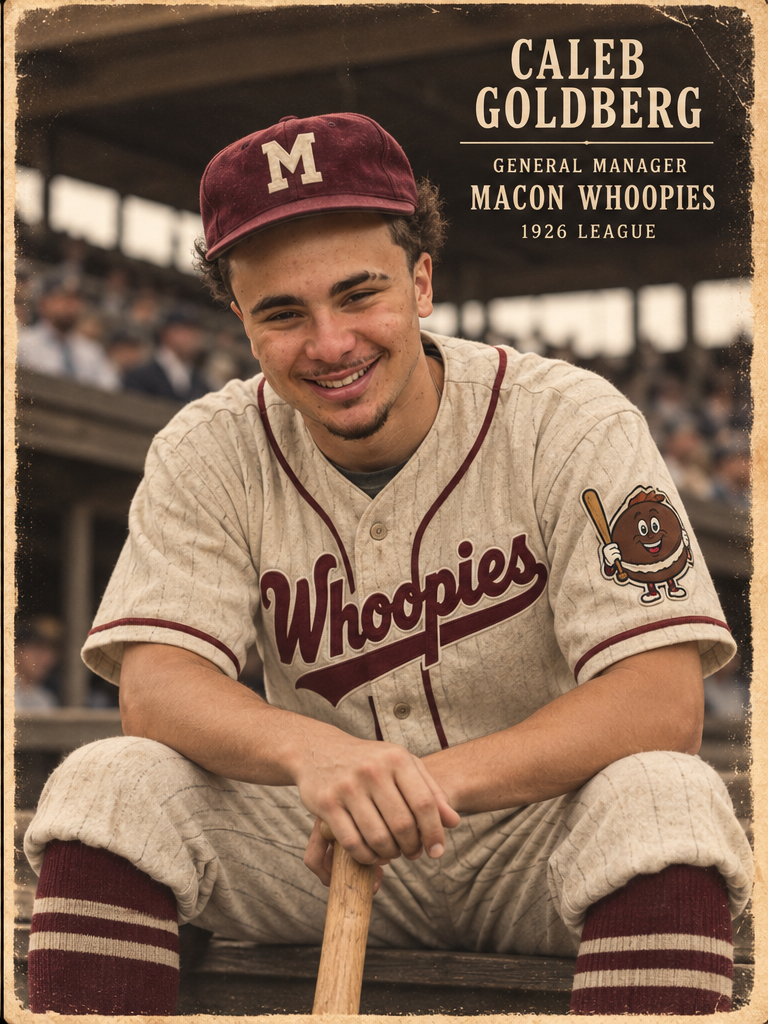
Caleb Goldberg ♢ Macon Whoopies
Caleb Goldberg represents the next generation of the Goldberg baseball front office—and he isn't interested in waiting his turn.
A knowledgeable and competitive baseball fan, Caleb has developed his own approach to roster construction rather than simply following his father's strategy. His early 1926-era roster reflects an emphasis on building a strong offensive foundation, with players including Hack Wilson, George Sisler, Bob Meusel and Bubbles Hargrave, while adding younger pieces with an eye toward what they can become in future seasons.
Caleb's draft strategy mixes recognizable talent with calculated upside. Selections such as Ray Benge and Ethan Allen demonstrate his willingness to look beyond immediate star power and acquire players who can become increasingly valuable as the league advances through the late 1920s.
The father-son rivalry adds another dimension to every draft. They regularly discuss players, statistics and strategy—but ultimately run independent franchises with the same objective: build the better organization.
For Caleb, beating the rest of the league would be satisfying.
Beating his dad would be better.
Front Office Philosophy: Young talent, long-term upside—and no family discounts on draft day.